
Elderflower Vinegar
This post may contain affiliate links. Please read our Disclosure Policy.
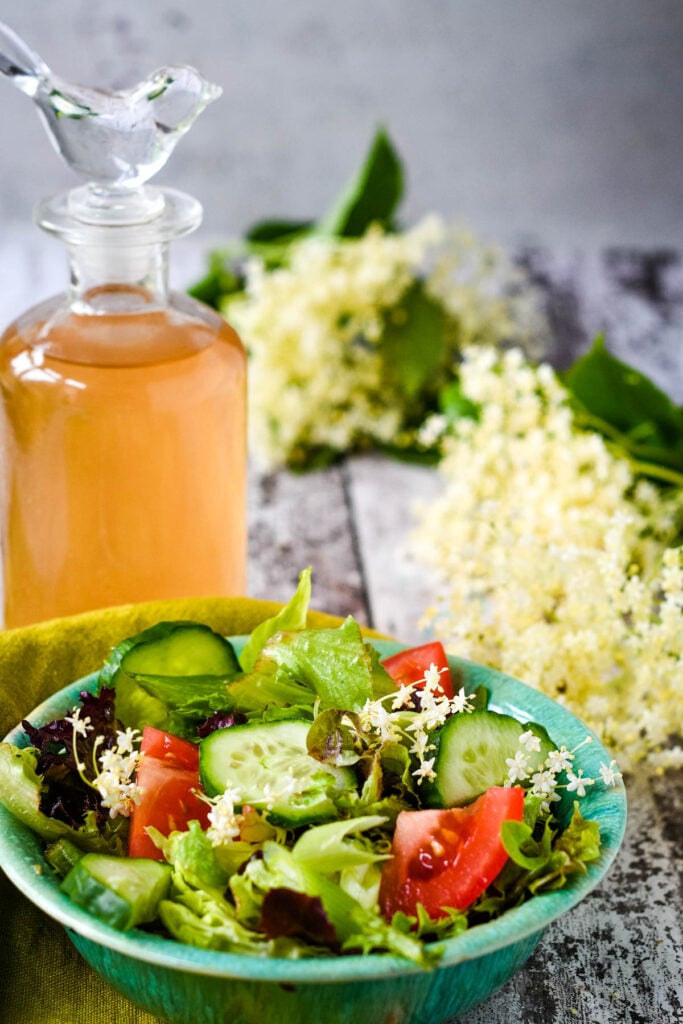
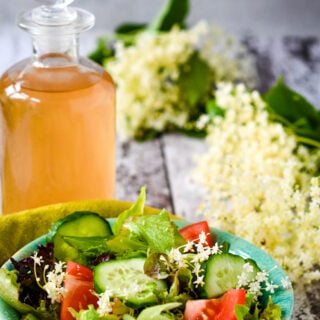
Homemade elderflower vinegar is deliciously different and super easy to make with only 3 ingredients. It is the perfect use for your foraged elderflowers and just terrific for summer salads.
Why you’ll love this recipe
- Elderflower vinegar isn’t something you can buy in the shops, so it’s just a wee bit special.
- This is such a super quick and easy recipe, just the way we like things here!
- The price, making your own elderflower vinegar is an inexpensive treat to add to your larder.
- Foraging is fun!
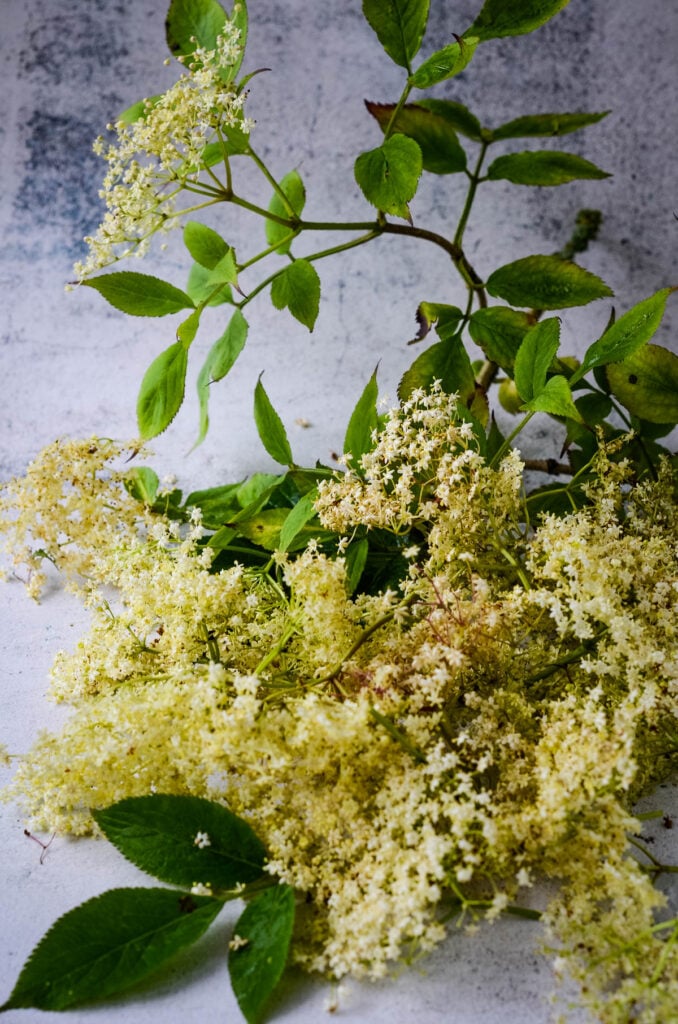
Elderflowers
Elder trees are incredibly common across the UK from parkland to the countryside they are everywhere. The leaves comprise 5-7 oval leaflets with feathery edges that form umbrels of creamy white tiny flowers. Elderflowers bloom from May till July and sometimes even August and have the most amazing floral scent.
You might know the elder tree by one of these other names, such as Black Elder, Ellhorn, Pipe tree, Bore tree, Eller and Holler.
These beautiful trees have many associations within folklore, for example, it was once believed that if you fell asleep under an elder in full bloom, you would be invited into the world of the fairies and be protected from evil spirits. It was also believed that if you chopped down an elder tree it would be replaced by a witch!
Elderflowers have been used for thousands of years for their medicinal and healing properties.
Elderflowers have both anti-septic and anti-inflammatory effects, so country folk have been using them in home-remedies for centuries. A mix of elderflower and water can be used to alleviate symptoms of anything from the common cold to some forms of arthritis.
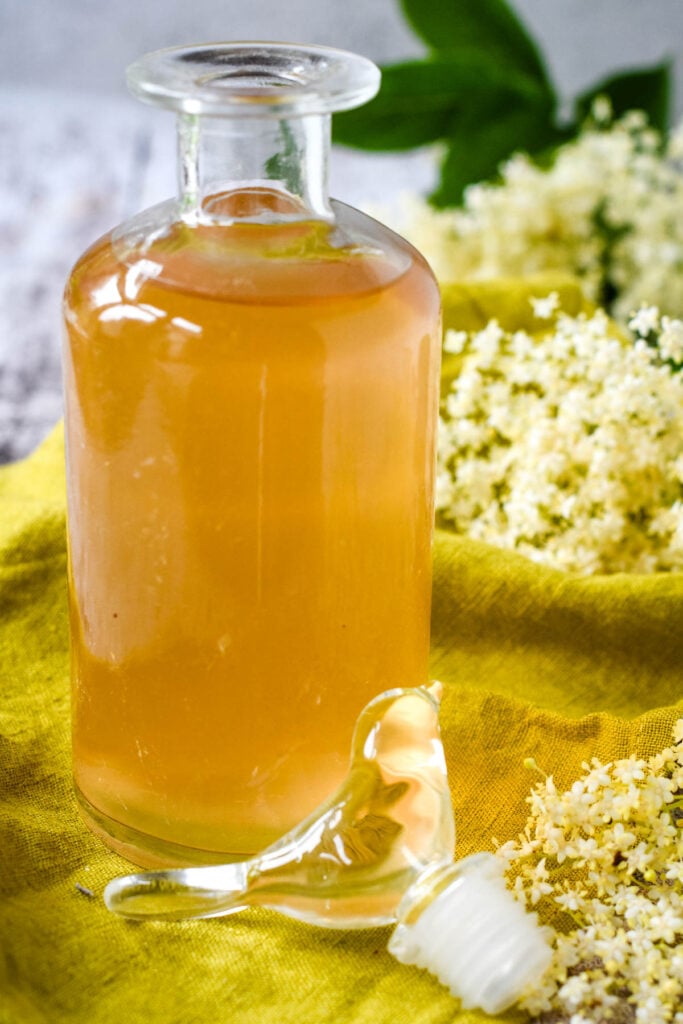
The rules of foraging
Leave enough for wildlife and avoid damaging habitats. Many animals rely on plants for survival, so never take more than you plan to eat as this could also deny wildlife from a valuable food source. Be mindful about wildlife habitats and avoid disturbing or damaging.
Seek permission before foraging. In certain areas, plant species will be protected so it is important to do some research and check with the landowner before you start gathering.
Don’t pick elderflowers from the edge of a busy road as the flowers will be full of pollution from traffic.
Only pick from areas that have a plentiful supply. Look for areas where you can find food in abundance and then only collect a small amount for personal use. Never completely strip an area as this could damage the species and deny another forager the chance to collect.
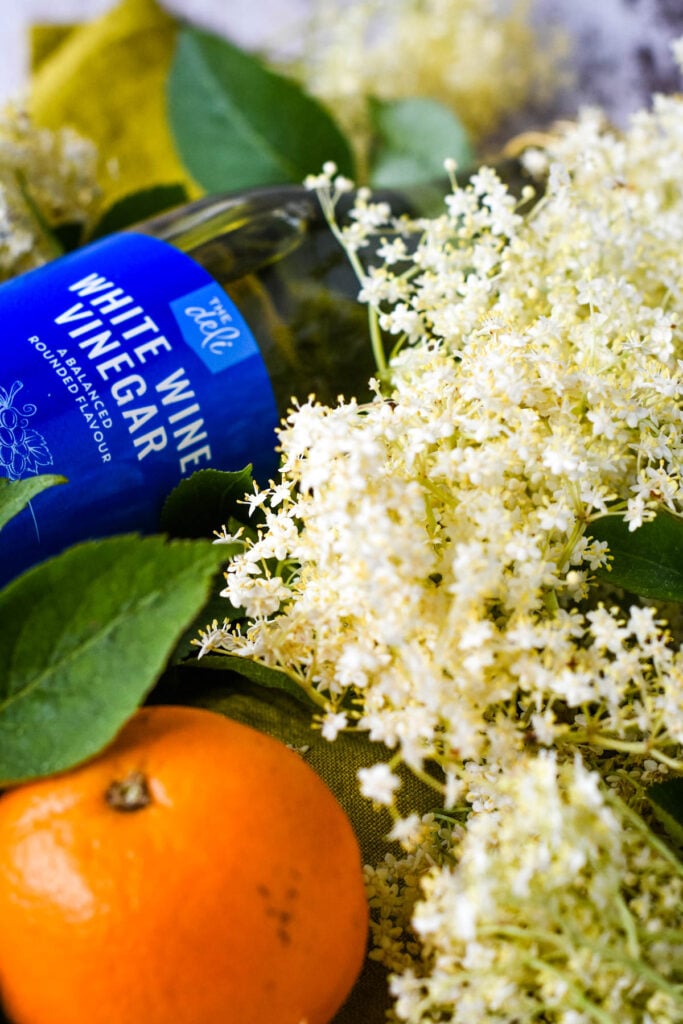
Ingredients for elderflower vinegar
You only need three ingredients to make your own homemade elderflower vinegar and one of those is of course the elderflowers themselves.
You only want the flowers and not the stems, though the really fine bits between the flowers are fine as you’ll ve sieving everything out once your vinegar is made.
Vinegar – I’m using white wine vinegar here. Under no circumstances can you use malt vinegar or basic white brewed condiment. These are way too strong and you would never taste the delightful elderflowers that will make this flavoured vinegar so special.
Orange zest/peel – this adds extra flavour to your elderflower vinegar. You can use lemon if you want a more zingy flavour, or even a mix of both.
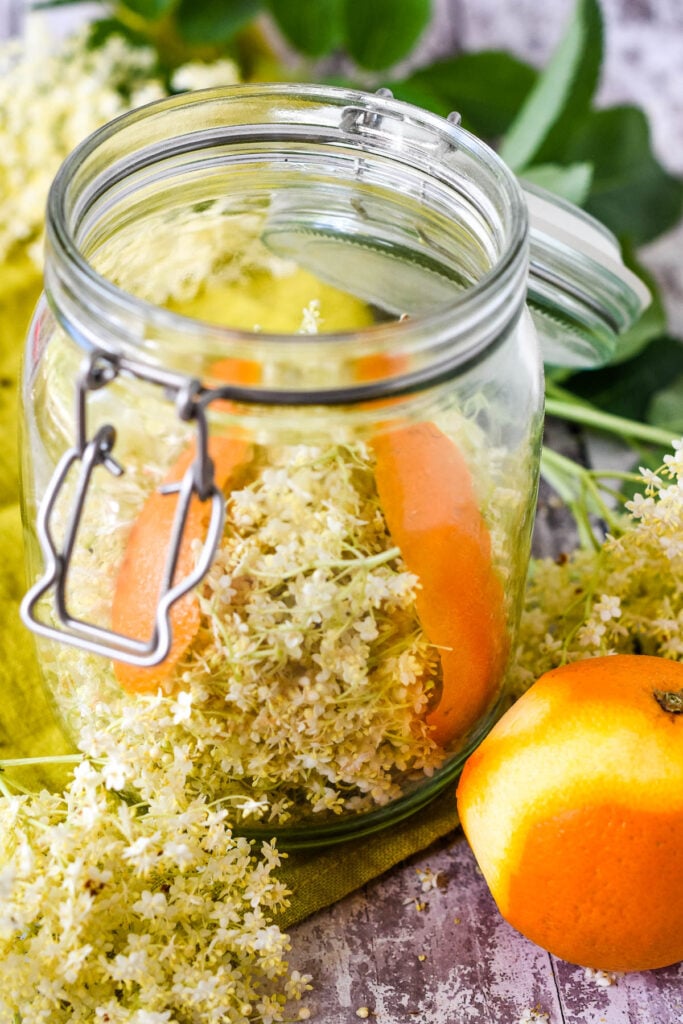
How to make elderflower vinegar
This is such a super easy recipe, and there are two ways to make this; The No Cook Method which just uses good old fashioned time to infuse the vinegar with the wonderful flavour of the elderflowers, or you can use a bit of heat to speed things up.
Prepare your elderflowers by shaking off any dust and debris well and snipping off the stalks.
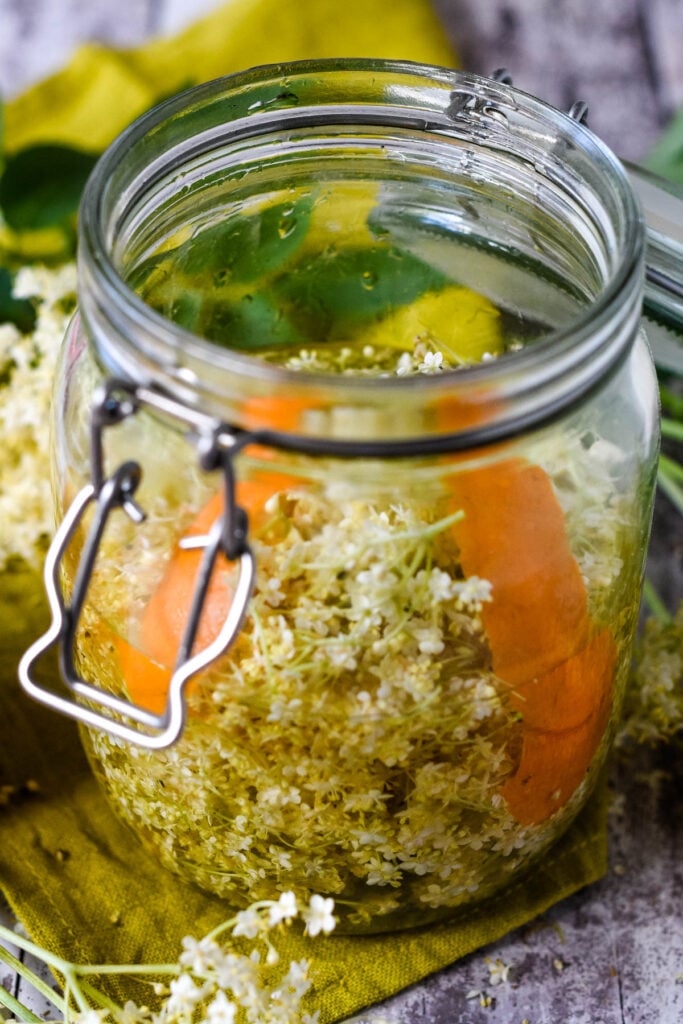
Put the flowers into a large clean jar and add the strips of orange peel.
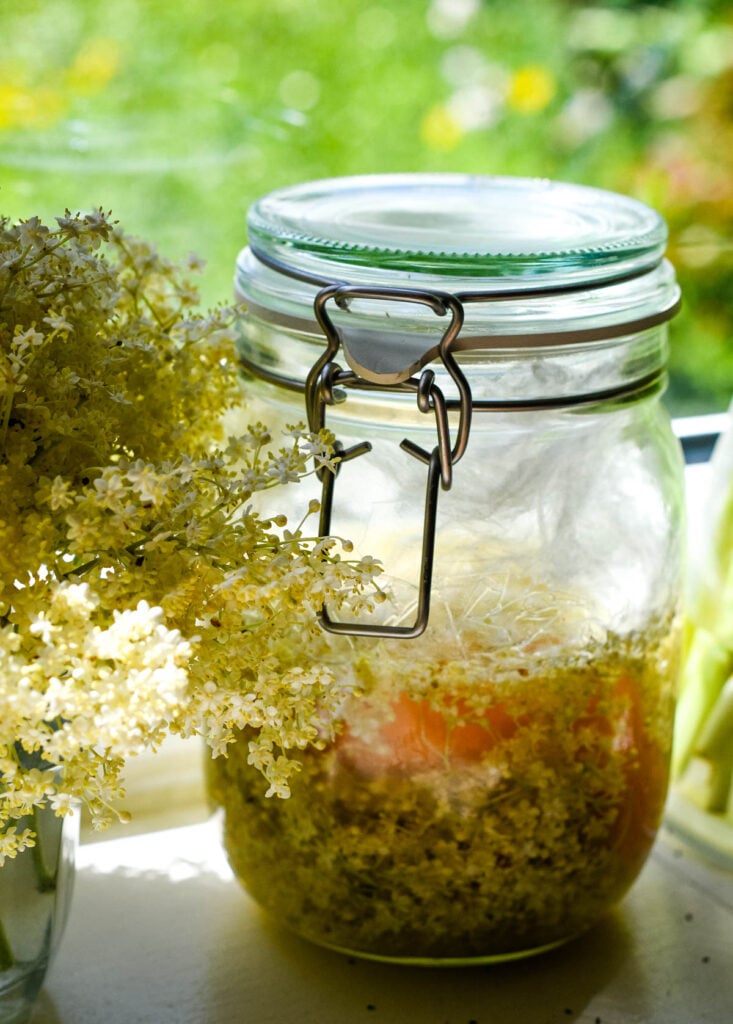
Pour over the white wine vinegar and pop on the lid. Now give your jar a good shake to make sure everything is completely submerged in the vinegar and set the jar aside on the windowsill for 2 weeks to let the flavours infuse the vinegar.
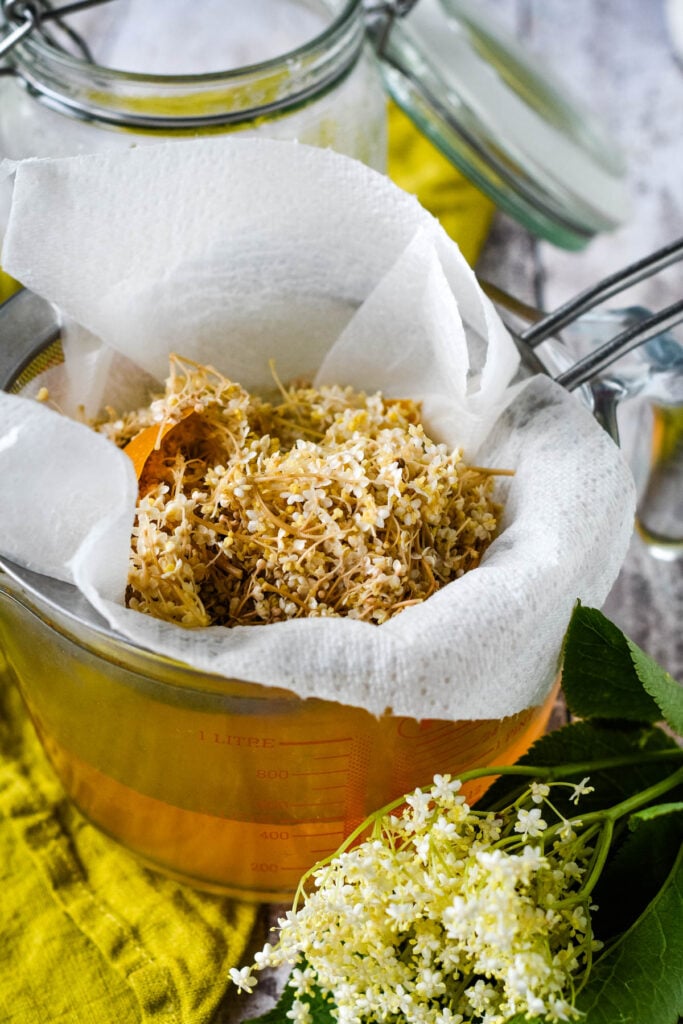
Line a sieve with kitchen roll (or muslin if you happen to have some to hand) and pour out the jar contents and let everything drip through into a jug bellos.
Press down on the solids to get out all the lovely flavoured vinegar and then discard the solids.
Pour your homemade elderflower vinegar into a sterilised bottle (or a couple of small bottles to use as gifts and label it.
The heat method
If you are in a hurry to make your elderflower vinegar then follow the first steps in preparing the flowers and instead of putting them in a jar with the orange zest put them in a non reactive pan and add the vinegar.
Heat this to a simmer (don’t boil) for about 10 minutes then remove from the heat, pop on a lid and set aside overnight before following the straining and bottling steps above.
How long does this last?
Your homemade elderflower vinegar will keep for up to a year in a cool cupboard. Once opened store it in the fridge and use within a month or so.
How to use elderflower vinegar
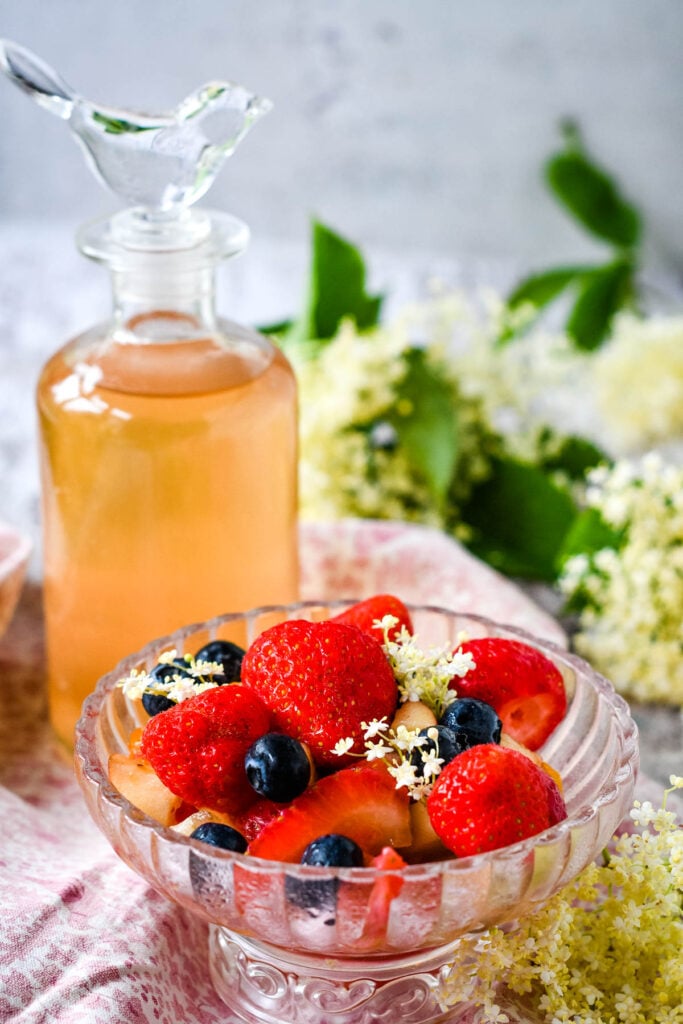
This is such a versatile vinegar. You can use it on any sort of light summer salad and veggies but you can also use it on a fruit salad with berries, peaches and the like to really add some zing.

Looking for more fun elderflower recipes? Then check these out before you go;
Raspberry, peach and elderflower jam
Elderflower fizz (non-alcoholic)
Strawberry and elderflower jam
For more great foraging recipes check out my foraging section where you’ll be able to make the most of the countryside.
Homemade Elderflower Vinegar
Ingredients
- 10 heads elderflowers
- 500 ml white wine vinegar
- 1 tbsp orange zest 2 strips of orange zest
Instructions
- Remove any dust etc from elderflowers and snip off stems, pare off two slices of orange zest
- Place the flowers and orange zest in large jar and pour over the vinegar, put on lid and shake well.Let this sit on the windowsill for 2 weeks
- Strain through paper lined sieve and pour into sterilised bottle
Heat Method
- Put the flowers, orange zest and vinegar in a non reactive pan and heat to simmer for 10 mins then remove from heat and cover and leave overnight before sieving into sterilised bottle as above.