
Super Easy Homemade Rosehip Vinegar
This post may contain affiliate links. Please read our Disclosure Policy.


Delightfully delicate and fruity this rosehip vinegar is perfect for roasted veggies, salads and more.

Autumn is well and truly with us around these parts. The trees are turning from green to yellow, gold and red. Changes every day.
Berries in the hedgerow are like tiny sparks. Mother Nature preparing for the main event of flaming pyrotechnics that will take place in a few weeks when all the trees are ready to light the greyed-out landscape with a riot of colourful flames.
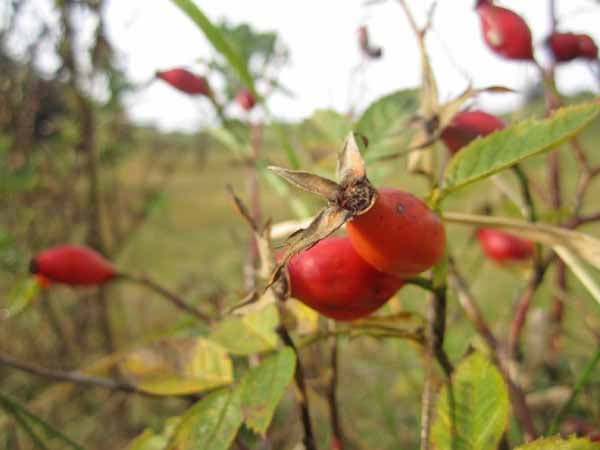
I love foraging and gather all the berries and fruits I can. Blackberries, haws, rowan and these rosehips. I’ve made rosehip jelly before, now it’s time to make some rosehip vinegar.
Ingredients for rosehip vinegar
- Rosehips of course
- White wine vinegar. Use white wine vinegar as it is lighter and more delicate than either red wine vinegar or apple cider vinegar.
- Orange peel from unwaxed orange – see notes below.
How to remove wax from citrus fruit
Most of the citrus fruit we buy from the supermarket is coated in wax as a preservative unless it’s sold as ‘unwaxed’.
It’s quite simple to remove this wax coating. Just wash the fruit in warm soapy water and give it a jolly good scrub with a nailbrush to remove the wax.
Rinse well in cold water and pat dry on a clean tea towel.

How to make rosehip vinegar
This is such a simple recipe and makes 1 bottle of delicious vinegar.
Simply wash and dry the rosehips and prick them all over with a pin. This is to allow the flavour to escape from the fruits themselves.
Pare the zest from the orange trying to avoid the bitter white pith as much as possible. Cut this into pieces about 2cm square.
Thread the rosehips on to a wooden skewer with pieces of orange in between and pop this into a sterilised bottle
Pour over the vinegar to cover everything completely.
Leave in a cupboard for 2 weeks for the flavours to develop.
Remove the skewer and rosehips or if you leave them in the bottle top up with more vinegar to ensure they are always covered.
How long does this keep?
Your rosehip vinegar will keep for up to a year in a cool cupboard.
What does rosehip vinegar taste like and how do you use it?
Rosehip vinegar is tangy and bright with a citrus kick.
It perks up chicken and pork, goes great on wintry greens and sparks up a basic salad with it’s fruity citrus zap.

Looking for more amazing foraging recipes to try? Then check these out before you go;
Spiced crab apple jelly with Scotch whisky (+video!)
Blackberry and apple gin liqueur
Homemade hawthorn berry ketchup
Sweet and sour pickled blackberries

Rosehip Vinegar
Equipment
- small bottle and wooden skewer
Ingredients
- 12 rosehips
- 200 ml white wine vinegar
- peel from 1/2 orange
Instructions
- Wash and dry the rosehips and prick all over with a pin so that the vinegar will penetrate the fruit as much as possible.
- Scrub and dry the orange to remove any wax preservative and remove half of the peel.
- Pare off as much of the bitter white pith as possible and cut into pieces appriximately 2cm/3/4″ in length
- Thread the rosehips and pieces of orange peel on to a wooded skewer as if you were making a mini kebab for the BBQ
- Push the loaded skewer into your bottle (sterilise first please) and pour in your white wine vinegar making sure it completely covers all of the fruits inside.
- Close the bottle and give it a shake. Put away in a dark cupboard for 2 weeks before use.
- The skewer looks very pretty in the bottle but if you want to keep it in there you must top up the vinegar to make sure the fruit is always submerged or you will end up with foostie fruit as we say here in Scotland, not nice at all.
Brought back memories, we used to collect rose hips and take them to the village school, 4d per lb we were paid, handy pocket money in those days.
Never see rose hip syrup now, but can remember the daily spoonful and still hear the words “It’s good for you”.
wow 4 pennies for a pound of them. Slave labour by todays standards! Thanks for your comment, K x
In my day in Ayrshire it was a penny a pound and if you picked 12 pounds you a shilling and got a badge!
Hi Lizzie
Love the sound of that, a shilling and a badge, wonderful!
K
Hello there! This is the third time I’ve come across a recipe on your site this season. I made a variation of your lavendar apricot jam and also pickled blackberries. Both were wonderful. I just harvested a gallon of rosehips and am looking forward to preserving them in a variety of ways. Thank you for the vinegar idea. I’m looking forward to learning more from Larder Love.
~Rachel
Hi Rachel
So pleased you are enjoying my recipes so much. Hope you like this vinegar too.
K x
good luck using the rosehip syrup
How long does this keep and should the skewer with the fruit be removed before storing?
Hi Jessica
It keeps for a year or more and I actually say in the recipe card and in the post itself that you can keep the rosehips in the vinegar – The skewer looks very pretty in the bottle but if you want to keep it in there you must top up the vinegar to make sure the fruit is always submerged or you will end up with foostie fruit as we say here in Scotland, not nice at all.
Hope you try the recipe
K